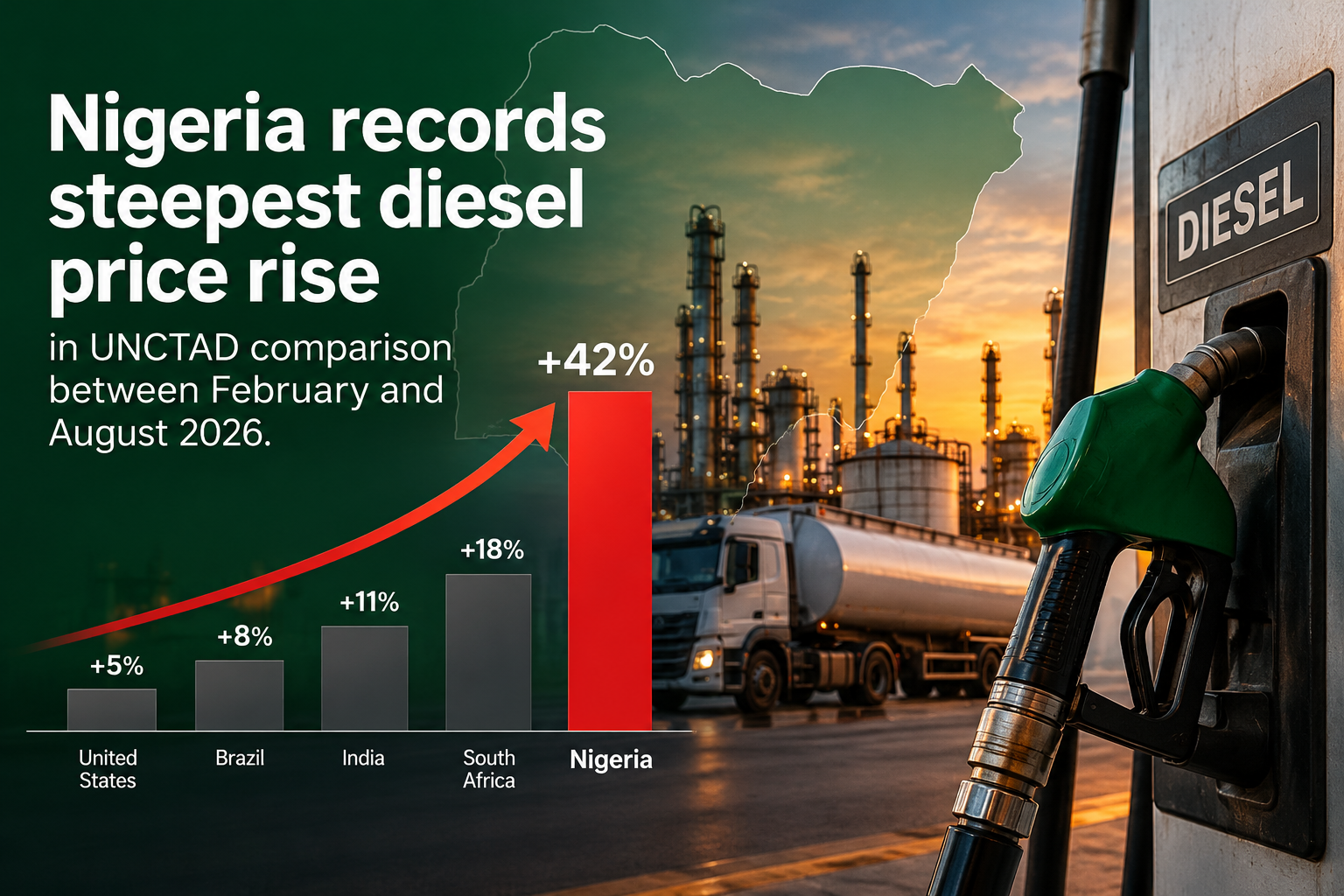
UNCTAD Cuts 2026 Global Growth Forecast to 2.6% as Energy Costs Rise
Key Highlights
- UN Trade and Development expects global growth to slow to 2.6% in 2026 from 2.9% in 2025.
- Higher energy costs and weaker external demand pose risks for African importers, businesses and households.
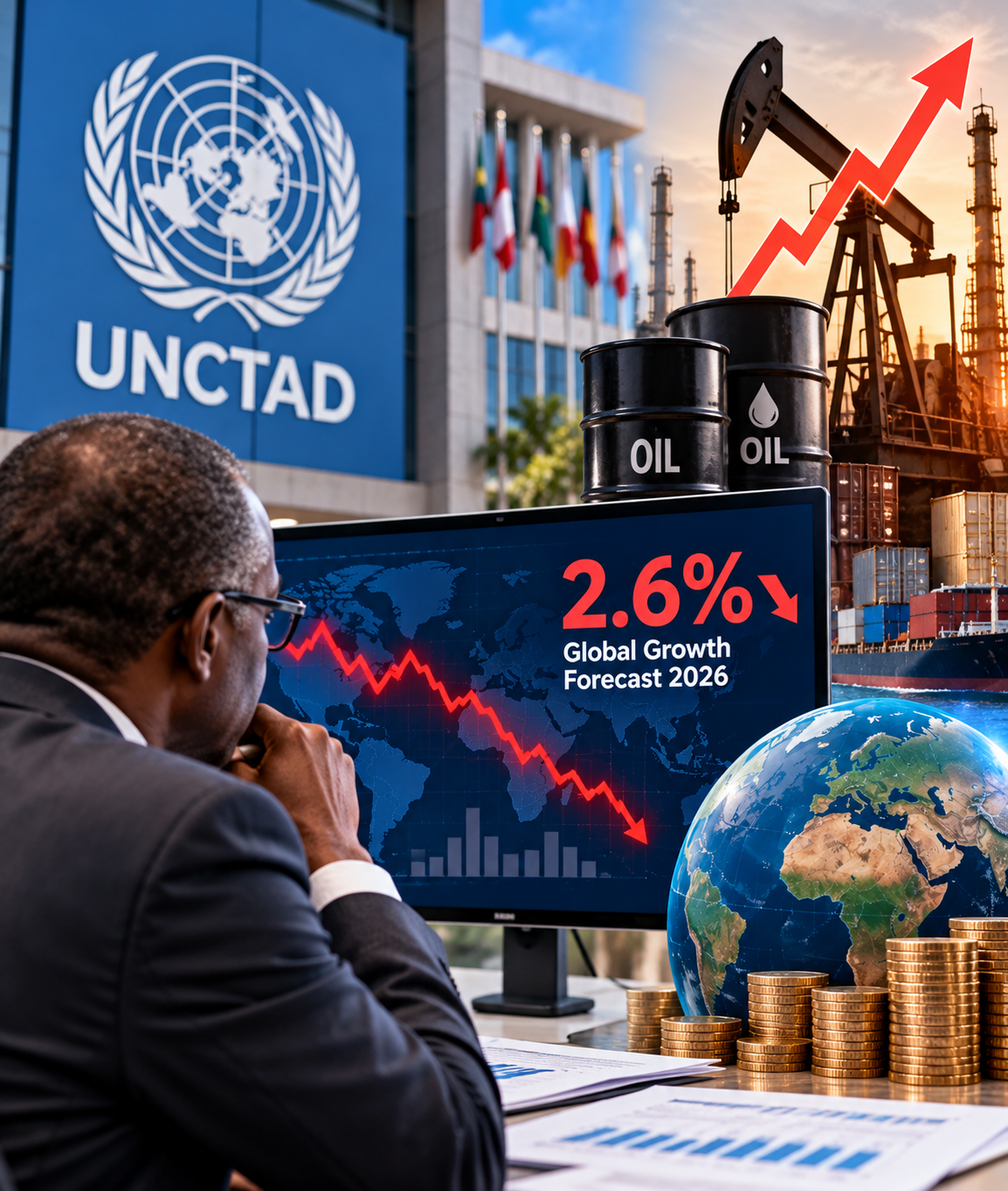
UN Trade and Development (UNCTAD) expects the world economy to grow by 2.6% in 2026, slower than the 2.9% recorded in 2025, as the conflict in the Middle East pushes up energy costs, disrupts supply chains and clouds investment prospects.
In its Trade and Development Report 2026: The Geoeconomics of Development, presented on 9 October, the UN agency says developing economies are expected to grow by 4.0% this year, down from 4.7% in 2025. It projects global trade in goods and services to expand by about 4% at constant prices.
Global trade reached a record US$35 trillion in 2025, but UNCTAD warns that higher prices, particularly for energy, are inflating trade values and do not necessarily mean that more goods are moving.
Energy costs are a direct risk
The report says Brent crude rose from around US$70 a barrel to more than US$110 in the weeks after the Middle East conflict began. Higher oil prices can raise the cost of petrol, diesel, shipping, electricity generation and fertiliser production. Those increases can spread through food distribution, public transport, manufacturing and the cost of running small businesses.
For African countries that import much of their fuel, an expensive energy bill can put pressure on foreign-exchange reserves and government budgets. Businesses may face higher delivery and production costs, while households can feel the effects through transport fares and the prices of goods. The impact will not be the same everywhere: oil and gas exporters may receive more revenue when prices rise, although they can still face higher import costs and wider economic risks.
UNCTAD also warns that developing countries face higher borrowing costs and volatile capital flows alongside rising bills for energy, food and fertilisers. That combination can leave governments with less room to invest in infrastructure and public services just as companies and consumers need support to absorb the shock.
Trade growth does not tell the whole story
The projected 4% increase in trade is measured at constant prices, which adjusts for price changes. UNCTAD’s report separately notes that rising energy prices are driving up the value of trade. The distinction matters: a larger dollar value of trade can reflect more expensive fuel rather than a stronger increase in the quantity of goods and services exchanged.
The report describes a changing global trade system in which governments are increasingly using industrial, financial, technology and trade policies to pursue economic and national security goals.
UNCTAD says trade between China and the United States has fallen by more than 20% since 2024, while East Asia has expanded trade with both China and North America. Export controls and tighter rules around investment and supply chains can make it harder for new suppliers to enter strategic industries.
For African exporters, these shifts create both risks and openings. Companies that rely on imported inputs may face higher costs, while producers able to supply regional markets could benefit if trade barriers and payment frictions are reduced.
The African Continental Free Trade Area and the Pan-African Payment and Settlement System are among the initiatives that could support larger regional markets and easier cross-border payments, provided implementation keeps pace with the ambition.
Renewable energy and regional markets offer some protection
UNCTAD argues that diversifying energy supplies can reduce exposure to imported fossil fuels. The report says renewables have been cheaper than the cheapest newly installed fossil-fuel alternative in more than 90% of cases since 2024, although the ability to benefit depends on local grids, financing, storage and project delivery.
For African governments and businesses, the implication is practical: reliable domestic power, efficient ports and transport links, access to affordable finance and stronger regional supply chains can help cushion external shocks. Renewable projects do not remove all energy risks overnight, but they can reduce dependence on imported fuels over time.
The forecast is not a prediction that every country will slow by the same amount. Outcomes will depend on exposure to energy imports, access to finance, export markets and the duration of geopolitical disruption. UNCTAD’s central warning is that the global economy is entering a slower-growth period in which energy costs and trade fragmentation make resilience more important.
In Summary
UNCTAD forecasts global growth of 2.6% in 2026, down from 2.9% in 2025, while trade volumes are expected to grow about 4% at constant prices. For Africa, expensive energy and weaker external demand could squeeze households, firms and public finances. Diversifying energy supplies and expanding regional trade can help reduce vulnerability.
In Summary
- What growth rate does UNCTAD forecast for 2026?
- 2.6%, down from 2.9% in 2025.
- Why is the outlook weaker?
- The Middle East conflict has raised energy costs and disrupted supply chains and investment.
- How could this affect African households?
- Higher fuel, shipping and fertiliser costs can feed into transport, food and business costs, especially in fuel-importing economies.