Nigeria’s Diesel Prices Rise 82.7% as Global Fuel Shock Bites
Key Highlights
- Nigeria recorded the steepest diesel price rise in UNCTAD’s comparison between February and August 2026.
- The figures show how global energy disruption has fed into domestic fuel costs, even as local refining and a short petrol discount offer partial relief.
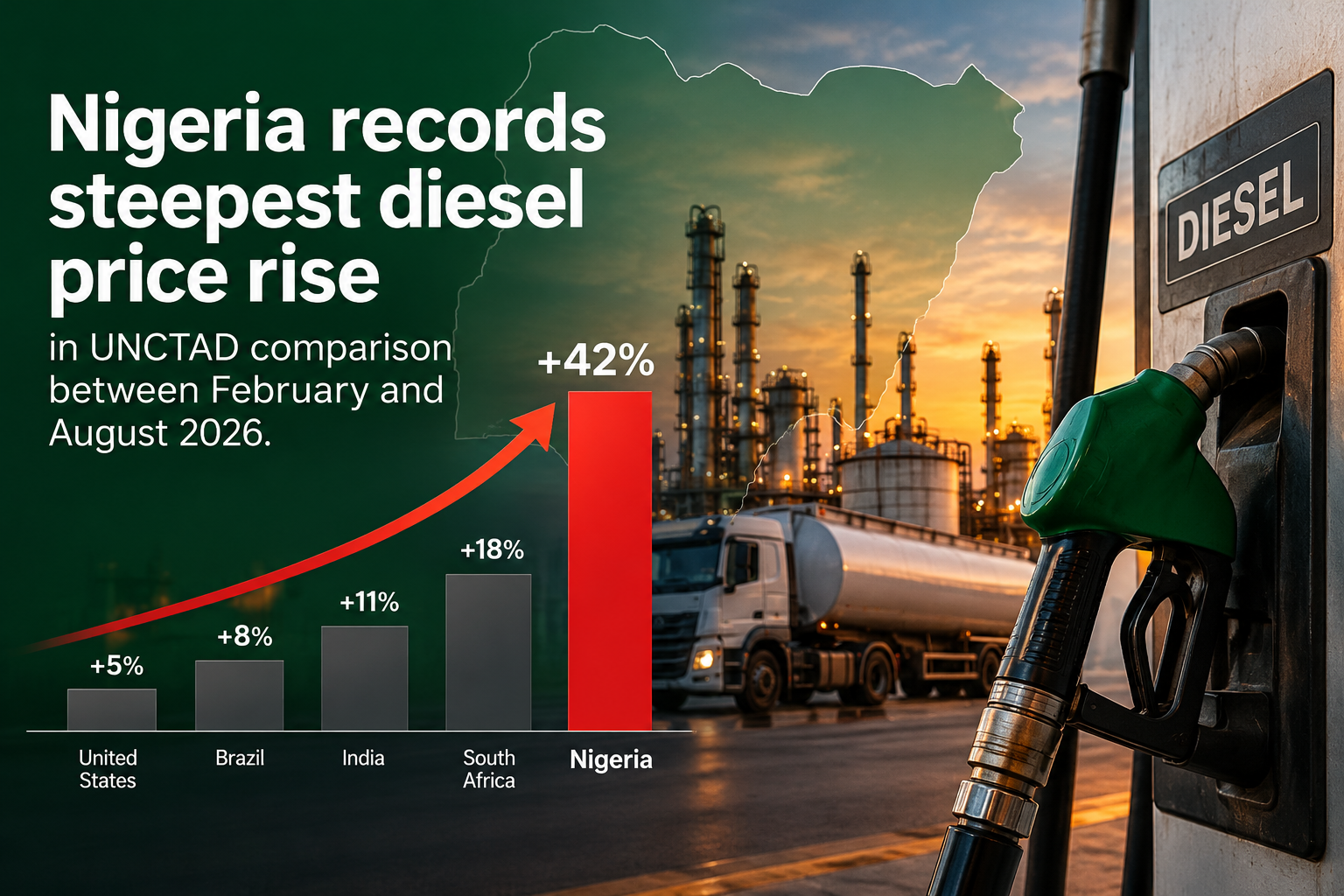
Nigeria recorded the world's largest diesel price increase in a comparison by the United Nations Trade and Development agency, with prices rising 82.7% between 23 February and 31 August 2026. Petrol prices increased by 48.1% over the same period, the fourth-highest rise among the countries and territories included.
The figures appear in UNCTAD's Trade and Development Report 2026, released on 9 October. The agency's comparison tracks how global energy disruption fed into domestic fuel prices. The 82.7% figure describes the increase over the period, not Nigeria's absolute diesel price or a forecast for the months ahead.
Why the fuel shock matters
UNCTAD links the pressure to conflict and disruption in the Middle East, which pushed Brent crude from about US$70 to above US$110 a barrel in the weeks after the crisis began. Higher international oil prices can raise the cost of moving goods, running generators and delivering services, although the report does not calculate the separate effect on every Nigerian business or household.
The agency says the impact differs between countries because fuel taxes, exchange rates, import dependence and local refining capacity vary. Nigeria exports crude oil, so higher prices can lift export earnings. However, households and businesses can still face higher costs when local supply depends on refined fuel exposed to international prices.
Reporting by Nairametrics on the UNCTAD figures says average daily petrol imports fell 26% to 14.6 million litres in August, from 19.7 million litres in July, as domestic refining expanded. That decline concerns petrol imports, not diesel, and does not by itself show that fuel prices have become affordable.
A short petrol discount does not cover diesel
Nigeria's government also announced a 30-day petrol discount through 31 October, with the state-owned NNPC Retail expected to absorb the reduction through its margins, the Financial Times reported. The measure applies to petrol, not diesel, and does not reverse the price increases recorded in UNCTAD's February-to-August comparison.
For businesses, the next indicators to watch are pump prices, local refinery supply, fuel imports and whether transport and distribution costs begin to ease. A fall in imports may reduce exposure to overseas supply, but its effect on prices depends on domestic output, competition and the cost of crude and other inputs.
The same global energy shock can affect African households differently. Mwenendo has also examined how rising prices squeeze household budgets in its coverage of Kenya's cost-of-living pressures.
In Summary: What Happens Next for Fuel Costs
UNCTAD found that Nigeria's diesel prices rose 82.7% and petrol prices 48.1% between late February and the end of August 2026. The figures show how global energy disruption reached domestic fuel markets, but they do not measure the absolute price paid by every consumer.
Businesses, transport operators and households remain exposed to fuel costs, while expanding local refining and changes in imports may alter supply. The next test is whether prices and distribution costs ease, not simply whether import volumes fall.
In Summary
- How much did diesel prices rise?
- UNCTAD recorded an 82.7% increase in Nigeria between 23 February and 31 August 2026.
- What period does the comparison cover?
- The price comparison runs from 23 February to 31 August 2026.
- Why does this matter?
- Fuel costs affect transport, distribution, power generation and the operating costs of businesses and households.